Historic Places Days in Canada takes place July 11-25, 2026. This year’s theme is “Communications Through Place and Time”.
When Steveston Had Just One Telephone
In Steveston’s early years, one of its busiest and most enterprising residents was JC Forlong of LaChute, Quebec. In April 1890, he opened Steveston’s first general store, providing local residents with much-needed supplies.
But running a store wasn’t enough to keep Forlong busy. He also served as the Steveston agent for the Canadian Pacific Navigation Company, helping coordinate the steamships that called at the City Wharf. On top of that, he operated the local telephone office for the New Westminster and Burrard Inlet Telephone Company.
In an era when telephones were still a novelty, Steveston had just one phone—and it was located in Forlong’s store. The line connected Steveston to Vancouver by a wire stretching 15 miles. To cross the Fraser River, part of the cable was even laid underwater along the North Arm. Not bad technology for the 1890s!
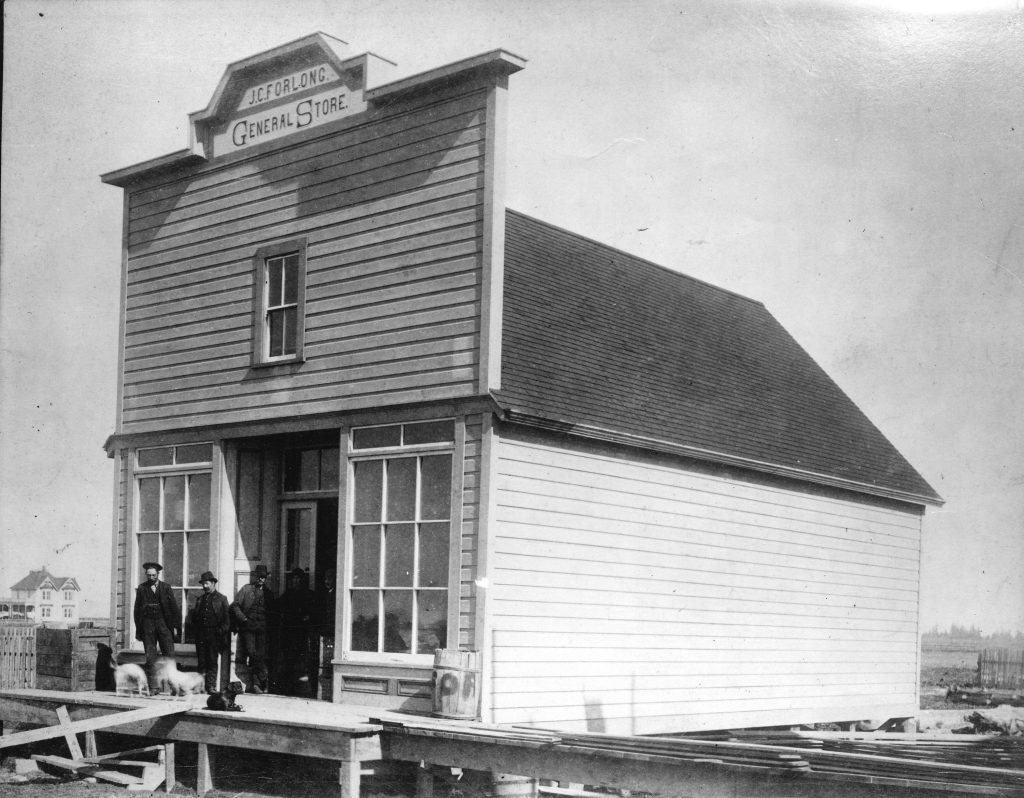
City of Vancouver Archives photo # AM54-S4-: Out P664. Part of Major Matthews collection.
A Messenger for Every Call
Of course, having only one telephone created a unique challenge. When a call came in for someone in Steveston—whether they lived in a house, worked at a cannery, or were employed at a boatworks—a messenger had to be sent to find them and deliver the news. The recipient then paid ten cents for the call, which would be about $3.70 today.
It’s a fascinating reminder of how quickly communication technology was evolving and how a single telephone in a general store helped keep an entire community connected.
Historic Places Days 2026
This story is particularly fitting as we celebrate Historic Places Days a national event hosted by the National Trust for Canada from July 11 to 25. This year’s theme, Communication Through Place and Time, explores how people have shared ideas, stories, skills, and knowledge across generations, and how historic places have helped make those connections possible.
The theme is also inspired by the 150th anniversary of the first telephone call, patented in Canada by Alexander Graham Bell. From oral traditions and handwritten letters to telephones and today’s digital technology, each new innovation has changed the way people connect. Steveston’s early telephone network is one small but fascinating chapter in that larger Canadian story.
Building Richmond’s Telephone Network
The telephone system in Steveston and the rest of the Richmond community continued to grow. In 1904, the BC Telephone Company acquired the New Westminster and Burrard Inlet Telephone Company and built a telephone exchange at 12004 No. 1 Road in Steveston. The building is still there today. Now privately owned, it is protected as a City of Richmond heritage building. The building remains a tangible link to the area’s early communications network.
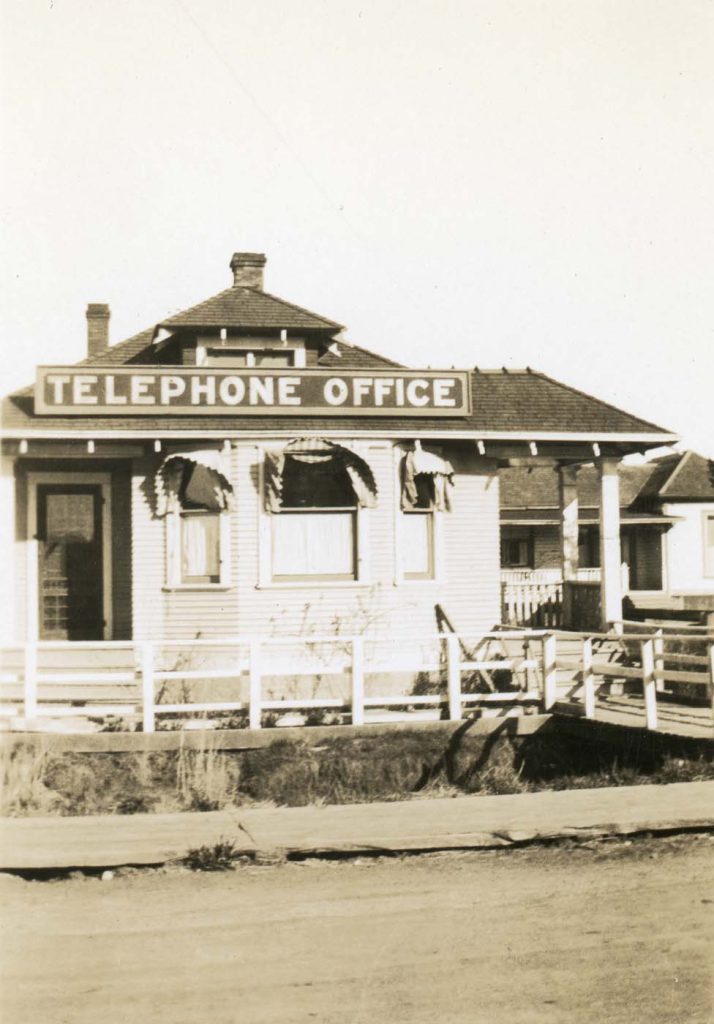
City of Richmond Archives photo # 1985 39 130.
Dialing Number One Phoenix Cannery
Adapting to new technology did take time. In 1912, there were just 27 telephone subscribers in Richmond. By 1922, that number had grown to 145. Phoenix Cannery on the Steveston waterfront proudly held telephone number 1.
Using a telephone was also very different from what we know today. Before 1954, Richmond residents would turn a hand crank on their telephone to signal the operator. Once connected, they would simply tell the operator the number they wished to reach, and the call would be manually connected. Multiple parties (or people) could listen in on your call – and this system was nicknamed “party lines.”
With 4,000 telephones in Richmond in 1954, the community converted to dial services.
From Party Lines to Smartphones
From a single telephone in a general store to hand-cranked party lines, and from operators to smartphones, communications technology has transformed dramatically in just a few generations. Yet these historic places and stories remind us that every innovation begins somewhere. Thanks to people like JC Forlong and the early residents who embraced new technology, Richmond became connected to the wider world, growing into the vibrant community we know today.
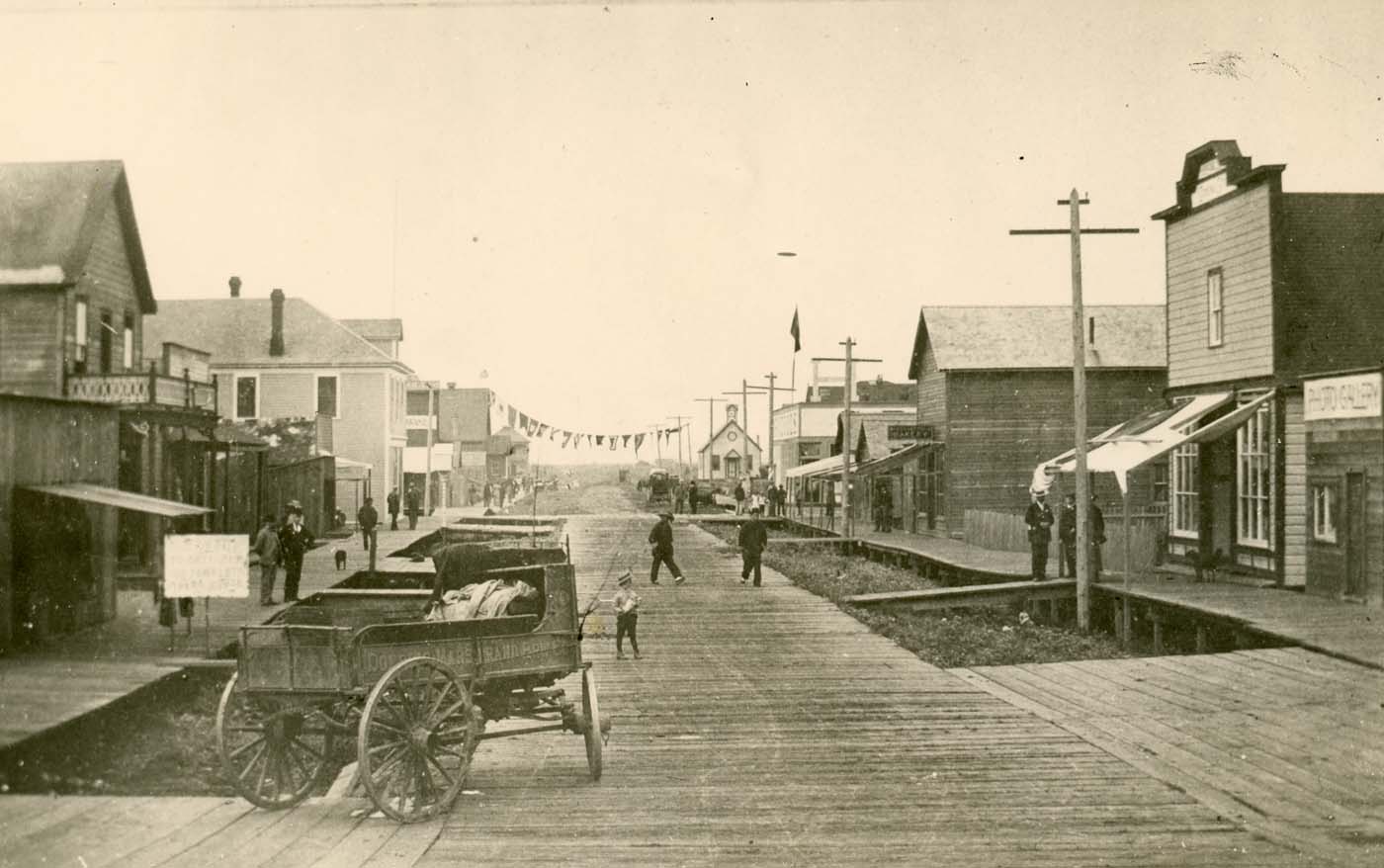
Cover photo: Second Avenue in Steveston, 1891 or 1895. CRA photo # 1984 17 75