Summer 2026 is wrapping up, but there’s still time to do some sightseeing in Steveston!
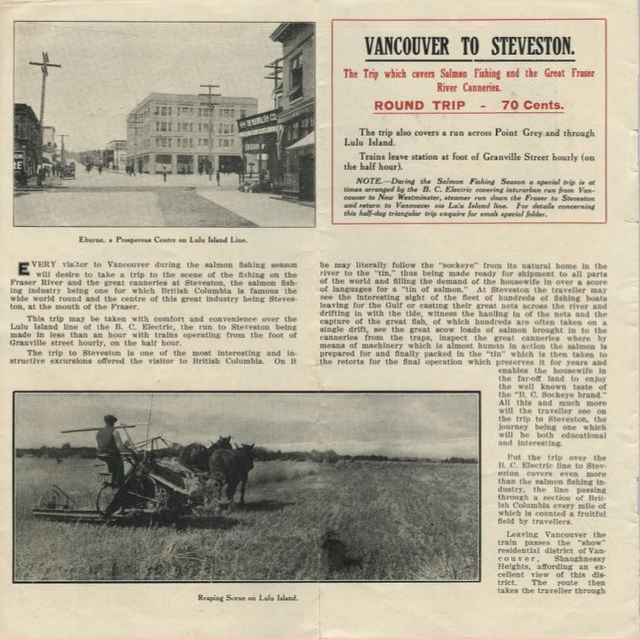
In 1913, the BC Electric Railway published a brochure called Tips for Tourists, encouraging visitors to travel by tram from Vancouver to destinations across the BCER rail system — including Steveston.
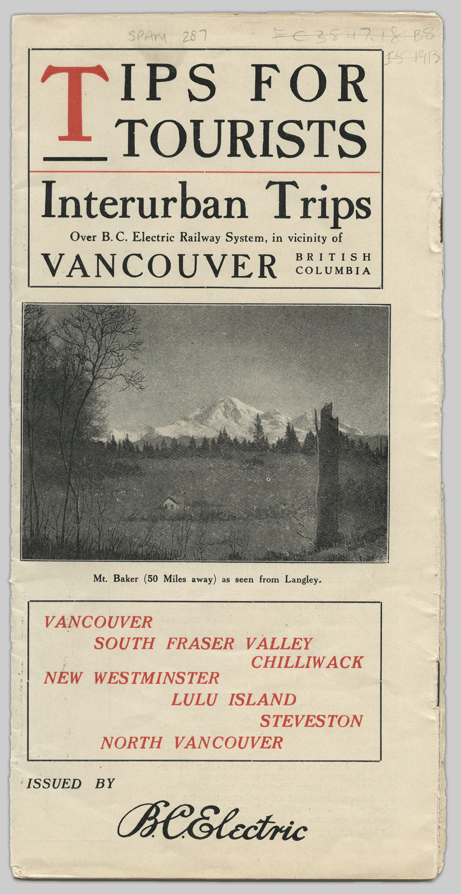
How much was a ticket to Steveston in 1913?
In 1913, a trip from Vancouver to Steveston cost 70 cents for a 30-minute journey on the interurban tram. While 70 cents may sound like a bargain today, this would be worth $20.00 today! By comparison, an adult transit ticket from Vancouver to Steveston in 2026 costs $5.10.
The brochure promoted the Steveston route enthusiastically, telling tourists that “The Trip to the Fraser River Salmon Fishing Grounds is one of the most instructive excursions offered on the Coast.”
What would tourists to Steveston see in 1913?
For visitors in 1913, Steveston offered the chance to see the salmon industry in action. The BCER brochure encouraged tourists to “follow the ‘sockeye’ from its natural home in the river to the ‘tin’, thus being made ready for shipment to all parts of the world and filling the demand of the housewife… for a ‘tin of salmon’.”
Steveston was presented to tourists at the time as both an industrial destination and an “educational and interesting” excursion.
Your 1913 Steveston Itinerary
The brochure offers a fascinating itinerary based on the Steveston fishing industry at its peak, just before the 1914 Hells Gate landslide further up the Fraser River destroyed the salmon breeding grounds and changed the local industry forever.
The itinerary it offers includes how a visitor can:
- “see the interesting sight of the fleet of hundreds of fishing boats leaving for the Gulf of casting their great nets across the river and drifting in with the tide”
- “witness the hauling in of the nets and the capture of the great fish, of which hundreds are often taken on a single drifts”
- “see the great scow loads of salmon brought in to the canneries from the traps” and
- “inspect the great canneries where by means of machinery which is almost human in action the salmon is prepared for and finally packed in the ‘tin’”.
Together, these descriptions show how the BCER marketed Steveston as a place where visitors could watch the full journey of salmon from river to cannery as well as watch the people who worked in the fishing and canning industries.
Although now the salmon fishery is much less active and there are no more canneries in operation, tourists can still visit the Britannia Shipyards National Historic Site and Gulf of Georgia Cannery National Historic Site, for a glimpse into our fishing, canning and boatbuilding heritage.
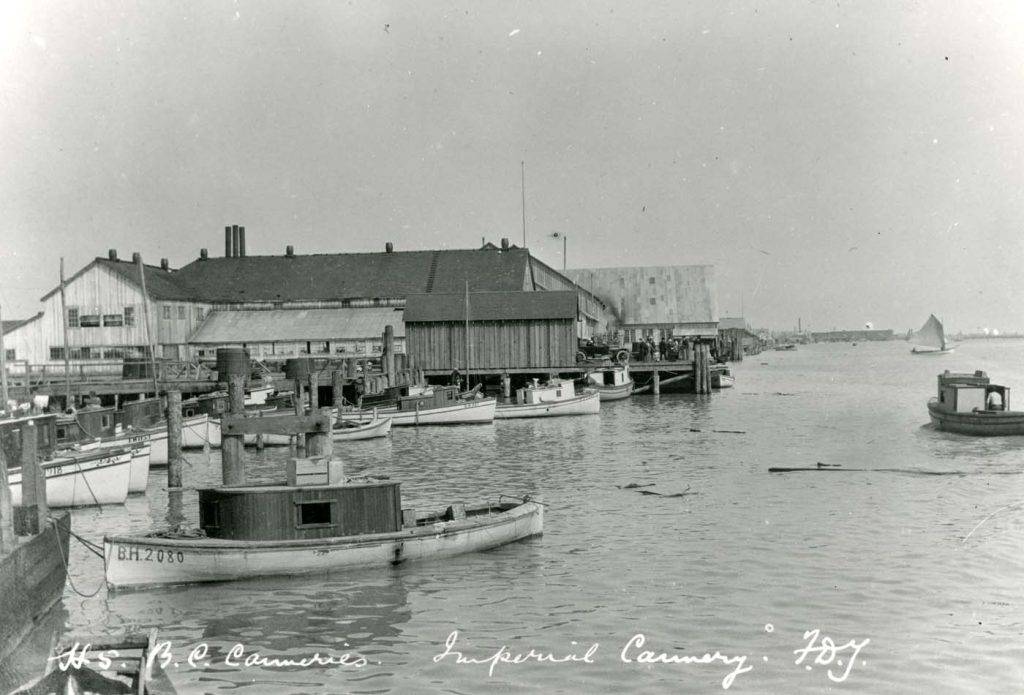
City of Richmond Archives photo # 1985 4 35
On the way, see where the rich people live…
The brochure also praised the journey to Steveston itself. Leaving Vancouver, a passenger “passes the ‘show’ resident district of Vancouver, Shaughnessy Heights” before travelling through Point Grey, described as “a section which is becoming thickly settled by wealthy residents.”
The trip was not only about the destination. It was also a chance to view the changing suburban landscape between Vancouver and Lulu Island and the wealthy people who lived near the rail line.
Farming, horse racing and… rifle practice?
Once passengers reached Richmond, which was then commonly referred to as Lulu Island, the brochure described it as “composed of rich alluvial soil and is the site of great market gardens, small farms and poultry ranches.”
Further along the route, visitors passed “Minoru Park, where horse racing is conducted during certain season each summer, and at Richmond… the rifle range of the provincial government where the militia of Vancouver and other points engage in rifle practice.”
For modern readers, this mix of market gardens, horse racing, militia training, salmon canneries, and interurban trams gives a vivid glimpse of Richmond more than a century ago.
But that’s not all!
The brochure’s fine print also described a special excursion available during salmon season: “During the Salmon Fishing Season a special trip is at times arranged by the BC Electric covering interurban run from Vancouver to New Westminster, steamer run down the Fraser to Steveston and return to Vancouver via Lulu Island lines.” It’s easy to see how Steveston’s famous salmon industry was a draw for tourists a hundred years ago, just as much as it is today.
You can find and download a digital copy of the 1913 “Tips for Tourists” brochure here.
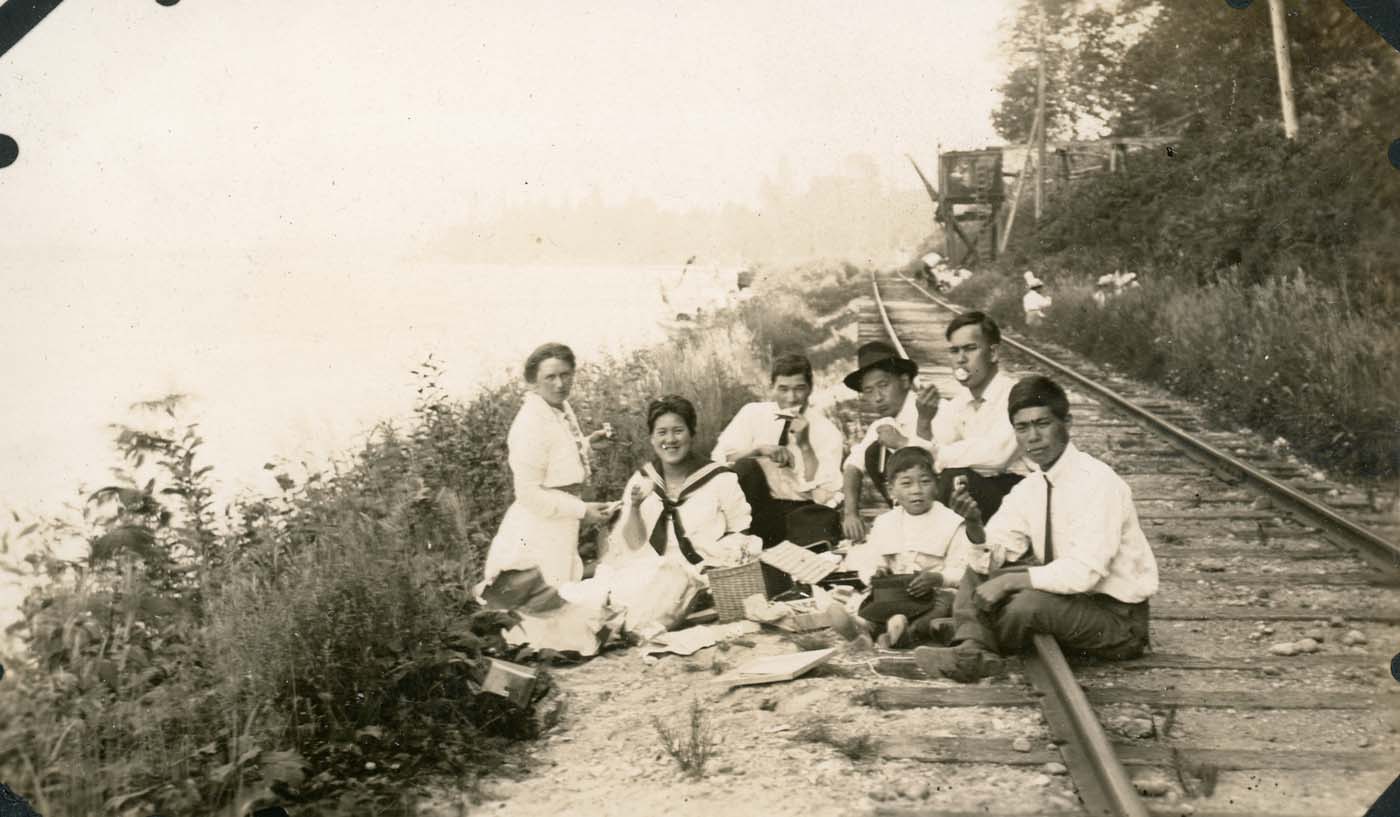
Cover photo: 1st July Picnic in 1915, From the Chilton Family fonds. City of Richmond Archives Photo # 2006 39 80